Your commercial HVAC system is one of the hardest-working pieces of equipment in your building. Whether it’s keeping employees comfortable during the hottest days of summer or providing reliable heat through the winter months, it plays an important role in maintaining a productive and welcoming environment. Because these systems often operate for long hours during extreme weather, even a small problem can quickly turn into an expensive repair or unexpected breakdown.
The good news is that many HVAC issues can be prevented with seasonal preparation. A little maintenance before temperatures become extreme can improve efficiency, reduce energy costs, and help your equipment perform more reliably when demand is at its highest. Businesses that rely on commercial HVAC systems for businesses should make seasonal inspections and preventive maintenance a regular part of their building management plan rather than waiting for problems to appear.
Why Seasonal HVAC Maintenance Is Worth the Effort
Commercial heating and cooling systems experience wear every day they operate. Fans, motors, belts, filters, and electrical components all work together to maintain a comfortable indoor environment. Over time, these parts naturally begin to wear down, and dirt, dust, and debris can reduce overall system performance.
When maintenance is skipped, small issues often go unnoticed until the system is working at full capacity during summer or winter. Unfortunately, these are also the times when businesses depend on their HVAC systems the most. An unexpected failure can disrupt daily operations, create an uncomfortable workplace, and even affect customers.
Scheduling maintenance before each peak season allows technicians to identify developing problems while repairs are still relatively simple. It also helps ensure that the system is operating as efficiently as possible before heavy use begins.
Replace Air Filters to Improve Airflow and Efficiency
One of the easiest ways to prepare an HVAC system is by inspecting and replacing its air filters. Although this task may seem minor, clean filters have a significant impact on both system performance and indoor comfort.
Air filters collect dust, pollen, dirt, and other airborne particles before they circulate through the building. As these particles build up, airflow becomes restricted. When this happens, the HVAC system must work harder to move air throughout the property, increasing energy consumption and placing additional stress on important components.
For commercial buildings with high foot traffic or environments that produce more dust and debris, filters may need replacement more frequently than the manufacturer’s standard recommendation. Keeping filters clean not only improves efficiency but also supports better indoor air quality for employees, customers, and visitors.
Inspect the Thermostat Before the Weather Changes
The thermostat acts as the control center of the entire HVAC system. Even if the heating and cooling equipment is in good condition, inaccurate thermostat readings can cause uneven temperatures and unnecessary energy use.
Before summer or winter begins, it’s a good idea to verify that the thermostat is reading temperatures correctly and switching smoothly between heating and cooling modes. Programmable settings should also match your business hours so the system isn’t operating unnecessarily when the building is unoccupied.
If your building uses smart thermostats or zoning systems, checking that every zone responds properly can help prevent comfort issues once the busiest season arrives.
Check Outdoor Equipment for Damage and Debris
Outdoor HVAC units are constantly exposed to changing weather conditions. Leaves, grass clippings, dirt, branches, and other debris can collect around the equipment throughout the year, restricting airflow and reducing efficiency.
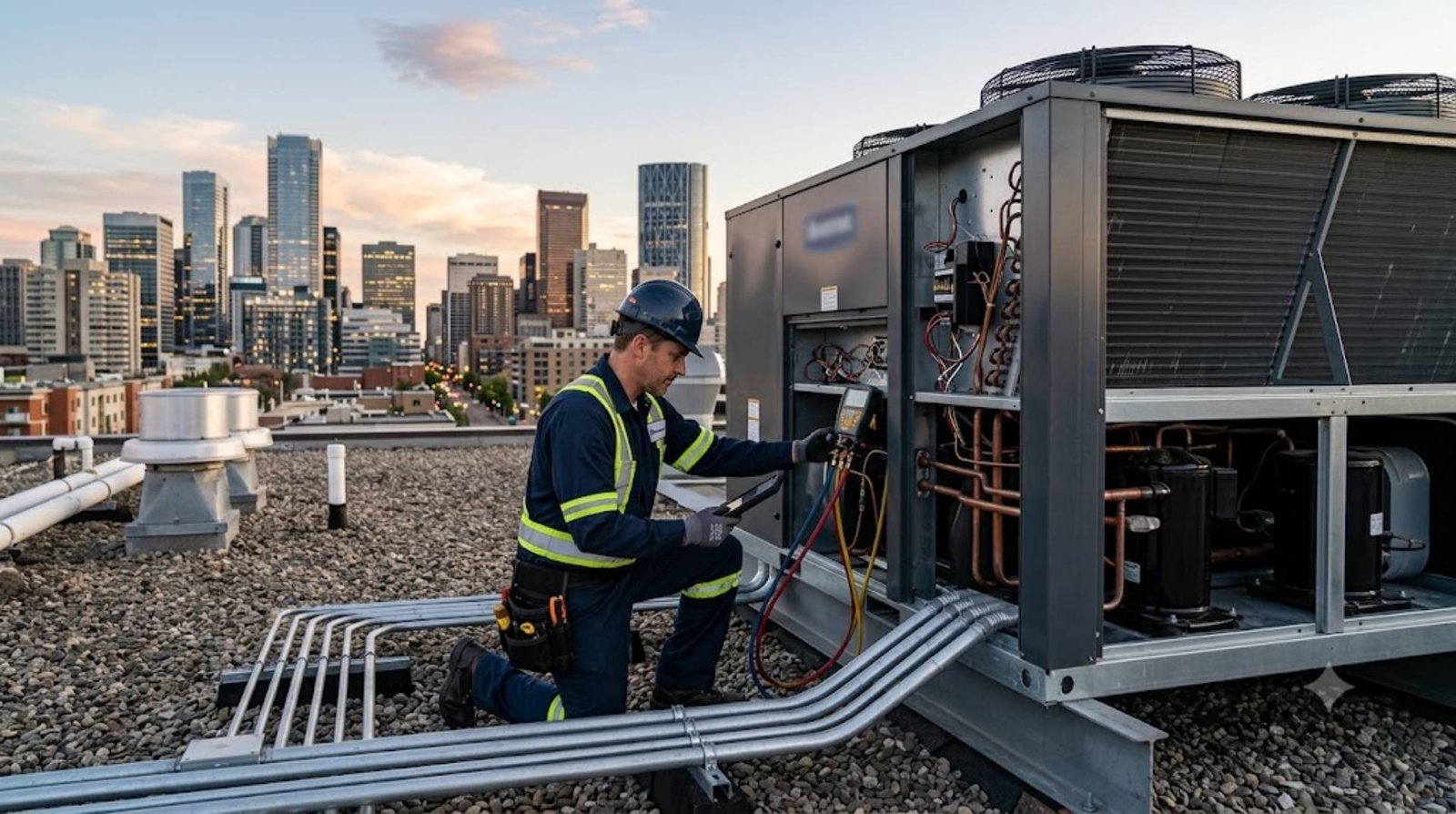
Before seasonal demand increases, inspect the outdoor unit carefully. Remove debris from around the equipment and ensure there is enough open space for proper ventilation. Restricted airflow forces the system to work harder, which can shorten equipment life and increase operating costs.
It’s also worth checking for visible signs of damage, loose panels, or unusual wear that may require professional attention before the system begins running continuously.
Examine Ductwork for Air Leaks
Even the most efficient HVAC equipment can struggle if conditioned air never reaches the rooms where it’s needed. Damaged or leaking ductwork allows cooled or heated air to escape before it reaches occupied areas, reducing comfort while increasing energy consumption.
Visible sections of ductwork should be inspected for loose connections, damaged insulation, or gaps where air may be escaping. In larger commercial buildings, unnoticed duct leaks can affect multiple rooms and create inconsistent temperatures throughout the property.
Addressing ductwork problems before peak heating or cooling seasons helps the HVAC system operate more efficiently while improving comfort across the building.
Schedule a Professional HVAC Inspection
While routine visual inspections are valuable, professional maintenance provides a much more complete evaluation of the system. Experienced HVAC technicians have the tools and knowledge to identify issues that may not be obvious during a basic inspection.
During a seasonal service appointment, technicians commonly inspect electrical connections, refrigerant levels, blower motors, condenser coils, safety controls, drainage systems, moving parts, and overall system performance. Any worn components can often be repaired or replaced before they cause larger failures.
Professional inspections also provide an opportunity to confirm that the system is operating safely and efficiently before the busiest months of the year begin.
Don’t Ignore Small Warning Signs
Many HVAC failures give warning signs long before the system stops working completely. Paying attention to these early symptoms can prevent expensive emergency repairs and unexpected downtime.
Some of the most common warning signs include:
- Uneven temperatures throughout the building
- Weak airflow from supply vents
- Unusual noises such as banging, rattling, or squealing
- Strange odors coming from the HVAC system
- Higher-than-normal utility bills
- Frequent cycling on and off
- Excess indoor humidity during cooling season
- Difficulty maintaining the thermostat setting
Although these problems may seem minor initially, they often indicate underlying issues that become more serious if ignored.
Prepare Differently for Summer and Winter
Although many maintenance tasks remain the same throughout the year, each season places different demands on commercial HVAC equipment.
Before summer, the focus should be on preparing the cooling system. Cleaning condenser coils, checking refrigerant levels, inspecting fans, and ensuring unrestricted airflow all help the air conditioning system perform efficiently during periods of extreme heat.
Winter preparation centers on the heating system. Burners, heat exchangers, ignition systems, electrical connections, and airflow should all be inspected to ensure reliable operation before temperatures drop. Preparing for each season individually helps reduce the likelihood of unexpected equipment failures when reliable heating or cooling is essential.
Build a Preventive Maintenance Schedule
Rather than treating HVAC maintenance as a once-a-year task, businesses benefit from creating a regular maintenance schedule. Routine inspections throughout the year allow small issues to be identified early, helping reduce repair costs and extend equipment life.
A preventive maintenance plan may include scheduled filter replacements, seasonal inspections, thermostat testing, cleaning outdoor equipment, checking ductwork, and monitoring overall system performance. Keeping accurate maintenance records also helps facility managers track recurring issues and make informed decisions about future repairs or equipment upgrades.
Consistent maintenance not only improves system reliability but also helps create a more comfortable indoor environment while supporting better energy efficiency throughout the year.
Conclusion
Preparing your commercial HVAC system before the arrival of peak summer and winter weather is one of the smartest investments a business can make. Seasonal maintenance helps improve efficiency, lowers the risk of unexpected breakdowns, supports better indoor comfort, and can reduce long-term operating costs.
Instead of waiting until your heating or cooling system is working at full capacity, take time to inspect, maintain, and service it before the busiest seasons begin. By addressing small issues early and following a preventive maintenance plan, businesses can keep their HVAC systems running reliably while creating a comfortable environment for employees, customers, and visitors all year long.