A well-arranged living room does more than look good. It shapes how people move, talk, rest, and share space every day. The right furniture placement turns a room from a collection of pieces into a place that feels natural and inviting. Whether your space is long and narrow, square, open to the kitchen, or squeezed into a small apartment, thoughtful layout makes the difference between a room you tolerate and one you actually enjoy.
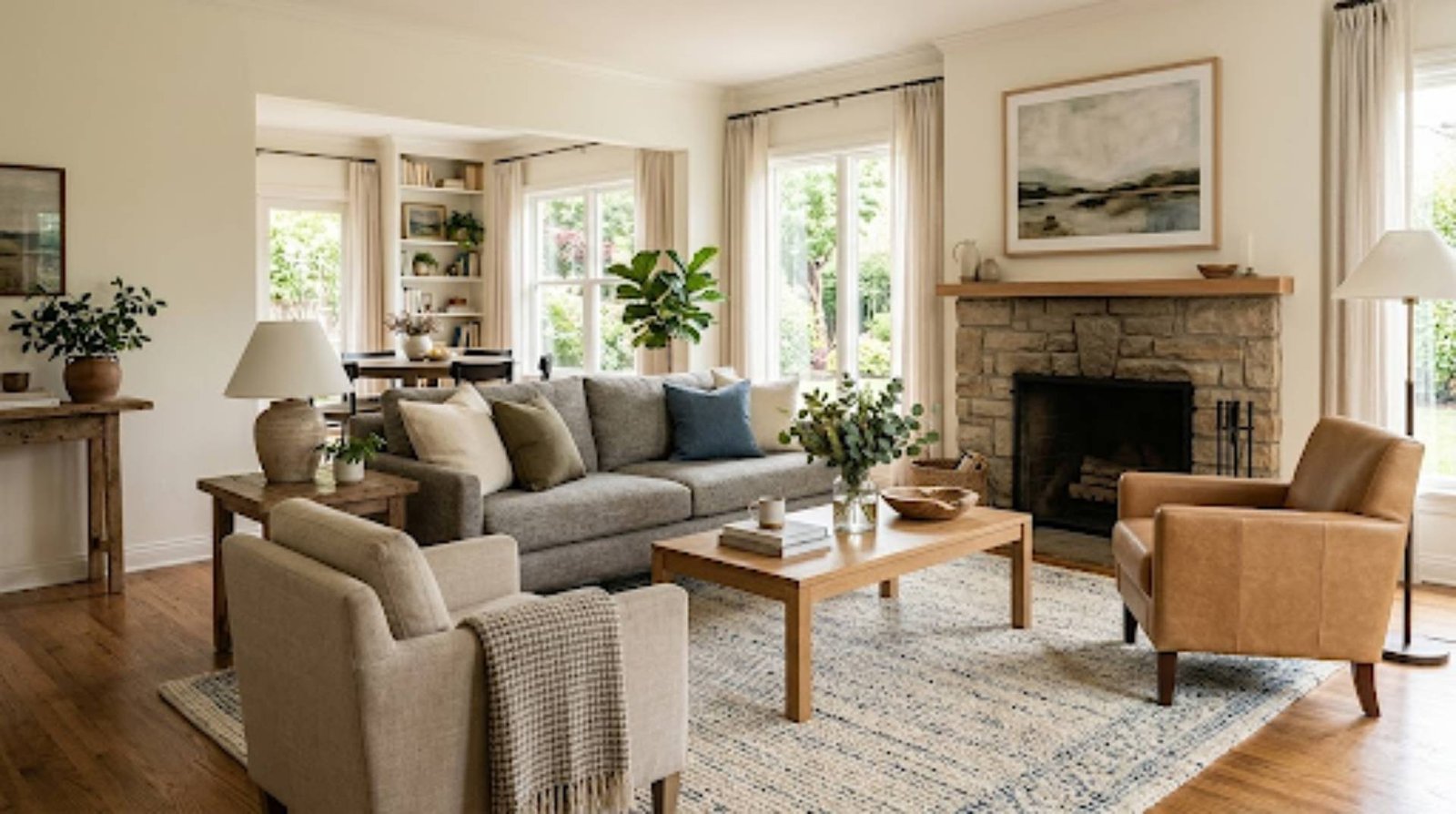
Start by noticing what already draws the eye. Most living rooms have a natural focal point—a fireplace, a large window with a view, a television, or even a striking piece of art. Build the seating around that feature so the room has a clear center of gravity. Once the focus is set, create a conversation zone. Pull chairs and sofas close enough that people can talk without raising their voices, ideally with no more than eight feet between seats. Leave clear paths at least three feet wide so people can walk through without squeezing past furniture or bumping knees.
Rectangular Rooms
Long, narrow rooms benefit from dividing the space into zones rather than lining everything against the walls. Place a sofa perpendicular to the length of the room to break up the tunnel effect. Angle a pair of chairs toward the sofa and each other to form a tight conversation group. If the room has a fireplace at one end and a television at the other, consider floating the seating in the middle so both features remain accessible. A runner or a well-sized area rug can visually shorten the space and anchor the main seating area.
Square Spaces
Square rooms feel balanced but can become static if everything sits in perfect symmetry. Offset the sofa slightly and introduce an accent chair at an angle. This creates movement and keeps the layout from feeling rigid. Keep the coffee table proportional—roughly two-thirds the length of the sofa—and leave enough space around it for easy reach and comfortable passage.
Open-Plan Interiors
When the living room flows into the kitchen or dining area, define the living zone with a large area rug and the back of a sofa. The sofa becomes a soft boundary that still lets light and conversation travel. Position seating so it faces both the room’s focal point and the adjacent spaces, making the layout feel connected rather than isolated.
Small Apartments
In compact rooms, scale matters more than quantity. Choose a sofa with clean lines and raised legs so the floor stays visible. Skip bulky sectionals if they crowd the space. Use a round coffee table or nested tables that can be moved when needed. Wall-mounted shelves or a slim console behind the sofa add storage without eating floor space. Keep pathways clear and avoid blocking windows—natural light is especially valuable in smaller rooms.
Family Living Rooms and Everyday Use
Homes with children or pets need durable pieces and flexible arrangements. Leave open floor space for play, and choose sofas and chairs with washable covers or performance fabrics. Position the television so it is visible from the main seating but does not dominate the entire room. Side tables within easy reach of every seat reduce the temptation to set drinks on the floor. Multifunctional pieces—storage ottomans, nesting tables, or a console that doubles as a desk—help the room handle homework, movie nights, and quiet reading without feeling cluttered.
Working with Televisions, Fireplaces, and Windows
Place the sofa so people can watch the screen without twisting their necks, but avoid making the television the only focus. In rooms with both a fireplace and a TV, mount the screen above the mantel only if the height remains comfortable for viewing; otherwise, put the television on an adjacent wall and angle seating toward both features. Large windows deserve respect—keep furniture low enough that the view remains open, and use sheer curtains or simple blinds that do not compete with the light.
Practical Proportions and Supporting Pieces
Aim for a coffee table height that sits level with or just below the sofa cushions. Leave 14 to 18 inches between the sofa and table so people can walk past yet still reach drinks and remote controls. An area rug should be large enough that the front legs of major seating pieces rest on it; this unifies the grouping. Side tables belong within arm’s reach of every seat. Accent chairs work best when they can be pulled into the conversation circle or pushed aside when the room needs extra floor space. Layer lighting—overhead, floor lamps, and table lamps—so the room feels useful at every hour of the day. Built-in or freestanding storage keeps everyday items out of sight and preserves the calm atmosphere.
A living room that works for entertaining, relaxation, and daily life rarely looks sparse or overcrowded. It simply offers clear paths, comfortable distances, and pieces that serve more than one purpose. Test arrangements by walking the routes people actually use and sitting in each seat to check sight lines and conversation distance. Small adjustments—sliding a chair a few inches closer or swapping a bulky table for a lighter one—often make the biggest improvement.
Frequently Asked Questions
How far should seating be for comfortable conversation?
Keep seats within six to eight feet of each other so people can talk easily without raising their voices or straining to hear.
What size rug works best under living room furniture?
Choose a rug large enough for the front legs of the sofa and chairs to rest on it, creating a unified seating zone.
Should the sofa face the television or the fireplace?
Orient the main seating toward the primary focal point of the room, then angle secondary pieces so both features remain usable.
How do I arrange furniture in a small living room?
Select scaled-down pieces, keep pathways open, use multi-functional furniture, and avoid blocking natural light sources.
Where should the coffee table sit relative to the sofa?
Place it 14 to 18 inches away—close enough to reach comfortably yet far enough for easy movement around the seating area.
Conclusion
A living room arranged with care becomes the quiet backbone of home life. It supports conversation without forcing it, welcomes guests without feeling formal, and adapts to the ordinary rhythms of everyday use. When furniture placement respects both the architecture of the room and the people who live in it, the space feels settled, useful, and genuinely comfortable.