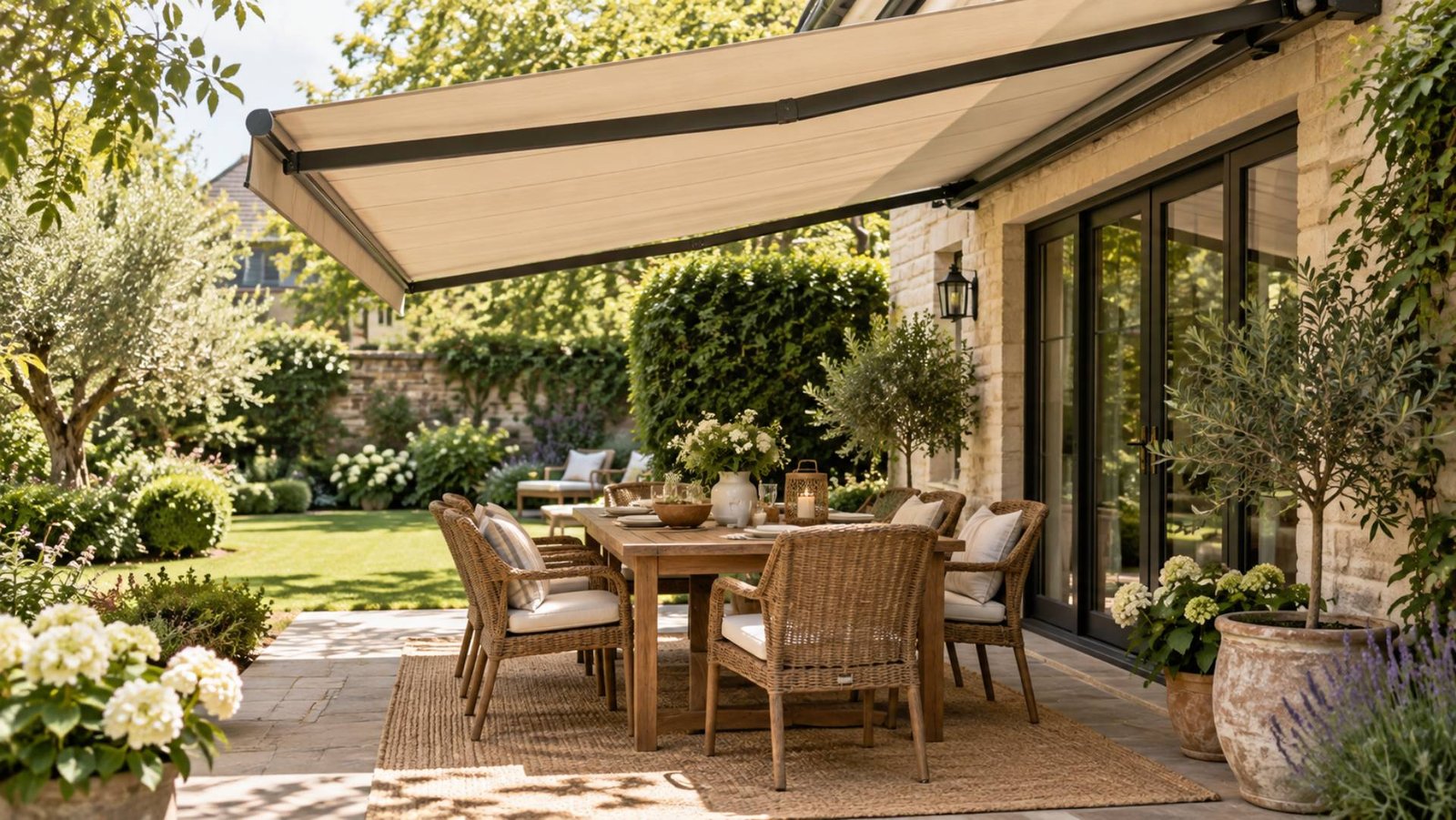
A shaded dining space outdoors turns a simple patio into a place you actually use through much of the year. Direct sun can make midday meals uncomfortable, while light rain often sends everyone indoors. A well-chosen covering solves both problems without permanently altering the garden.
Installing a garden awning over your dining area gives flexible shade and light shelter when you need it, then retracts neatly when you prefer open sky. The result is a more usable outdoor room that works with the British climate rather than fighting it.
Why Shade Matters for Outdoor Dining
Garden dining areas often face the strongest sun during the middle of the day and early afternoon. Without protection, tables and chairs heat up, food wilts, and people seek cooler spots indoors. Even on milder days, UV exposure builds up over time, and sudden showers can end a meal early.
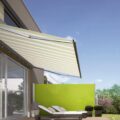
A patio awning creates an overhead canopy that blocks direct sunlight and reduces glare. Quality fabrics also offer useful UV protection, helping keep the space cooler and more comfortable. Because most modern systems retract, you keep full access to sunlight on cooler days and protect the fabric when the weather turns harsh.
Choosing the Right Size and Projection
Start by measuring the area you want to cover. Include the full footprint of the table plus chairs when people are seated and moving. A common mistake is sizing only for the tabletop, which leaves diners in the sun.
Projection—the distance the awning extends from the wall—matters as much as width. For a typical family dining set, a projection that covers the table and the space around it is usually needed. Wider projections give better rain protection in light showers, but they also need a solid mounting surface and careful consideration of wind exposure.
Wall-mounted retractable systems suit most houses with a patio against an exterior wall. Freestanding options exist for more open gardens, though they require different structural support. Match the size to how you actually use the space rather than trying to cover every square metre of paving.
Key Features That Affect Daily Use
Modern patio awnings offer a range of practical features that improve convenience and longevity.
Consider these points when comparing options:
- Manual or motorised operation: Manual systems use a crank and are simpler. Motorised versions open and close at the press of a button and can include remote controls.
- Weather sensors: Wind sensors automatically retract the canopy if gusts become too strong, protecting the fabric and arms. Rain sensors perform a similar role in heavier showers.
- Fabric choice: Look for materials with good water resistance and UV protection. Tighter weaves and quality coatings perform better in changeable weather.
- Frame materials: Aluminium arms resist corrosion and keep weight manageable while remaining strong enough for everyday use.
- Optional extras: Integrated LED lighting extends evening use. Infrared heaters can make the space comfortable on cooler evenings without enclosing the area.
These features turn a basic shade solution into something you can rely on without constant adjustment.
Planning Permission and Practical Installation Issues
In most cases a retractable patio awning falls under permitted development rights for houses. This generally applies when the structure does not project excessively, stays within height limits, and does not overhang neighbouring land or public areas. Flats, listed buildings, conservation areas, and properties in other protected locations often need formal consent.
Always check with your local planning authority if you have any doubt. A professional installer can usually advise on typical requirements and measure the site accurately. Correct mounting is essential—the wall must be sound and capable of supporting the load when the awning is fully extended, especially in wind.
Installation itself is normally straightforward once measurements are confirmed. The work is usually completed in a day for a standard domestic system, with minimal disruption to the rest of the house.
Practical Tips for Everyday Enjoyment
Position the dining table so the main seating area sits fully under the canopy when extended. Leave enough clearance for people to walk around chairs without brushing the edge of the fabric. Consider the path of the sun through the day—west-facing spaces often need more protection from low afternoon rays.
Keep the fabric clean with occasional gentle wiping using a damp cloth and mild detergent. Harsh chemicals should be avoided. Retract the awning during prolonged heavy rain, strong winds, or winter months when it is not needed. This simple habit protects the mechanism and extends the life of the material.
If you plan to use the space in cooler weather, think about how heating and lighting will work with the awning. Portable heaters or permanently installed options can make a difference on mild evenings, while subtle lighting creates a more inviting atmosphere after dark.
Common Challenges and How to Avoid Them
Wind remains the biggest practical concern. Even well-built systems have limits. Sensors help, but in very exposed gardens it may be wiser to retract the awning earlier rather than risk damage. Drainage is another point—water should run off the fabric cleanly rather than pooling.
Colour and style should complement the house rather than fight it. Neutral frames and fabrics tend to age more gracefully and suit a wider range of outdoor furniture. If you change garden furniture later, a restrained awning design remains flexible.
Finally, avoid overcomplicating the project. A well-sized retractable system that matches your actual dining needs will deliver more usable days outdoors than a larger or more complex structure that is rarely fully extended.
Final Thoughts
A patio awning offers a practical way to create reliable shade and light shelter over a garden dining area. By focusing on the right size, suitable features, and correct installation, you gain a flexible outdoor space that works with British weather rather than against it.
Measure carefully, check any planning considerations, and choose a system that matches how you intend to use the area. With sensible daily habits—retracting in strong winds or heavy rain and keeping the fabric clean—the shaded dining space becomes one of the most used parts of the garden for years to come.